May 21, 2026
7 Sacred Valley Dishes You Can’t Miss on Your Trip
Peruvian cuisine is considered one of the finest in the world, with iconic dishes such as ceviche and lomo saltado recognized globally. However, during your trip to Peru, it is important to know that each region has its own culinary identity. That is the case in Cusco, where every journey introduces you to a different dish filled with tradition and flavor. Therefore, if you visit the Sacred Valley, renowned for offering some of the region’s best culinary creations, you should not miss the following dishes that are an essential part of its gastronomic heritage.
Contents
- Chiri Uchu
- Roasted Guinea Pig
- Fava Bean and Mushroom Capchi
- Lechón
- Chicharrón
- Adobo cusqueño
- Chairo
- Most Popular Ingredients in the Sacred Valley
- Frequently Asked Questions
1. Chiri Uchu
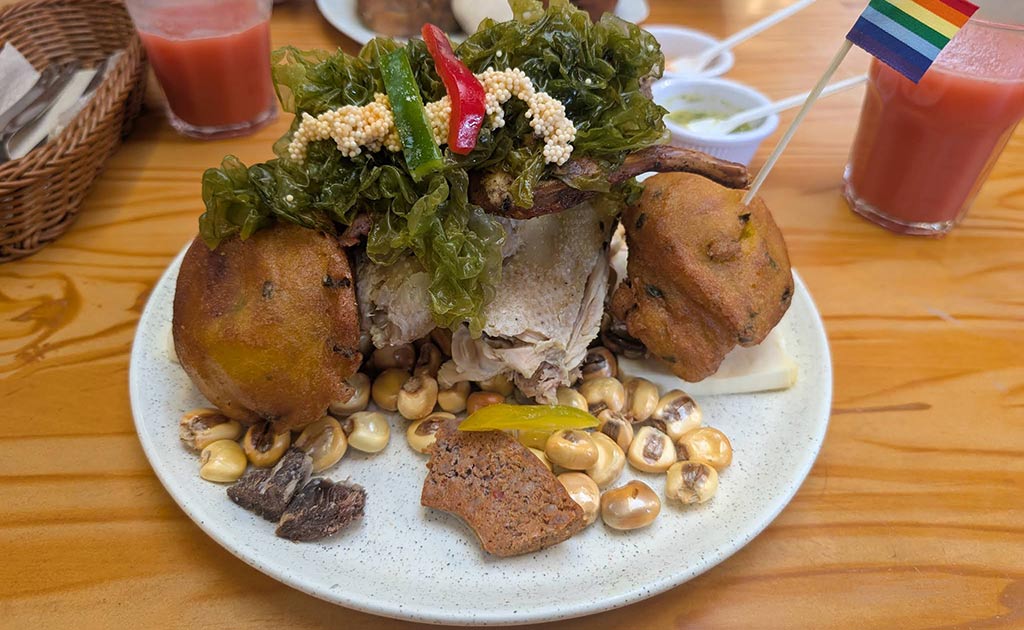
Considered the most iconic dish of the Cusco region, Chiri Uchu combines ingredients from Peru’s coast, highlands, and jungle. It is said that during Inca times, this dish represented the diversity of foods found throughout the Tahuantinsuyo Empire.
One of its main characteristics is that it is served cold. Although Chiri Uchu can be found year-round, in the city of Cusco it is traditionally eaten during the Corpus Christi festival (between May and June), when many food fairs are held in its honor.
Ingredients: Fried guinea pig, chicken, sausage, cured meat, cheese, seaweed, fish roe, toasted corn, rocoto pepper, and fritters.
Why try it? It offers a diverse cultural experience that brings together many traditional Andean products.
2. Roasted Guinea Pig
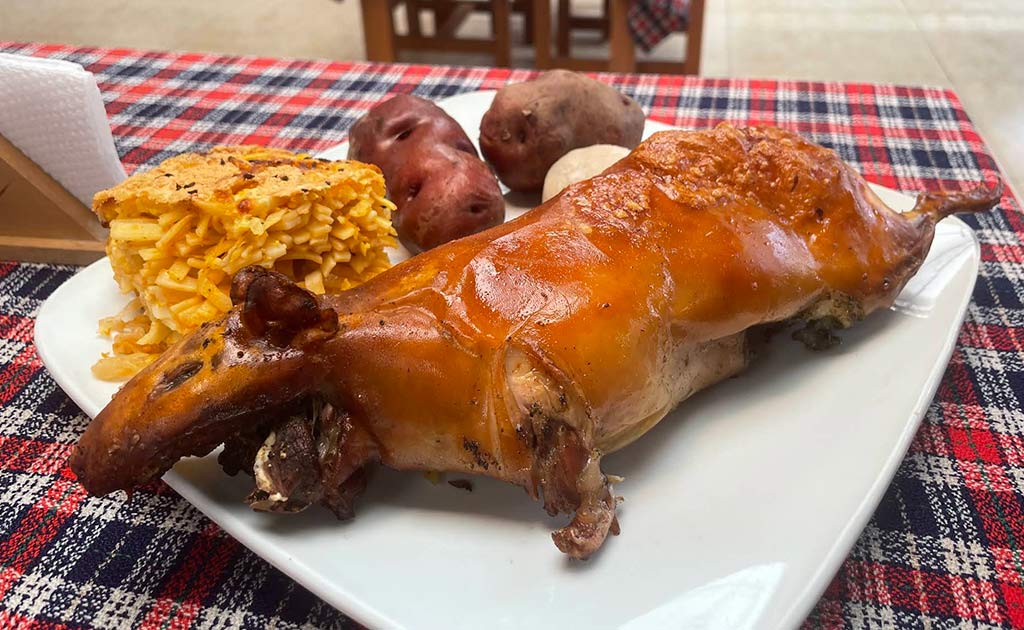
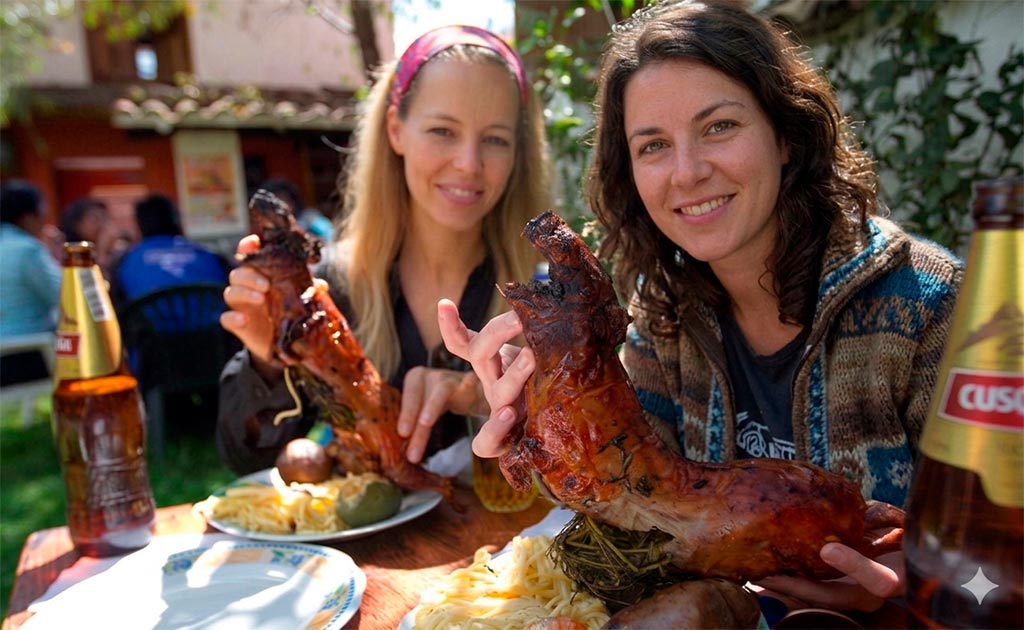
Eating guinea pig is an essential part of Andean culture, especially in Cusco, where numerous dishes are prepared in its honor. Roasted guinea pig is an ancestral symbol of the region and a fundamental part of Cusco cuisine, also valued for its high protein content.
The guinea pig is roasted whole and seasoned with Andean herbs that give it a unique and traditional flavor. It is an excellent option to enjoy while exploring the Sacred Valley.
Ingredients: guinea pig meat, potatoes, noodles, and salads.
Why try it? Because it allows you to taste one of the most representative and highly valued meats in Andean tradition, recognized for both its flavor and nutritional benefits.
3. Fava Bean and Mushroom Capchi
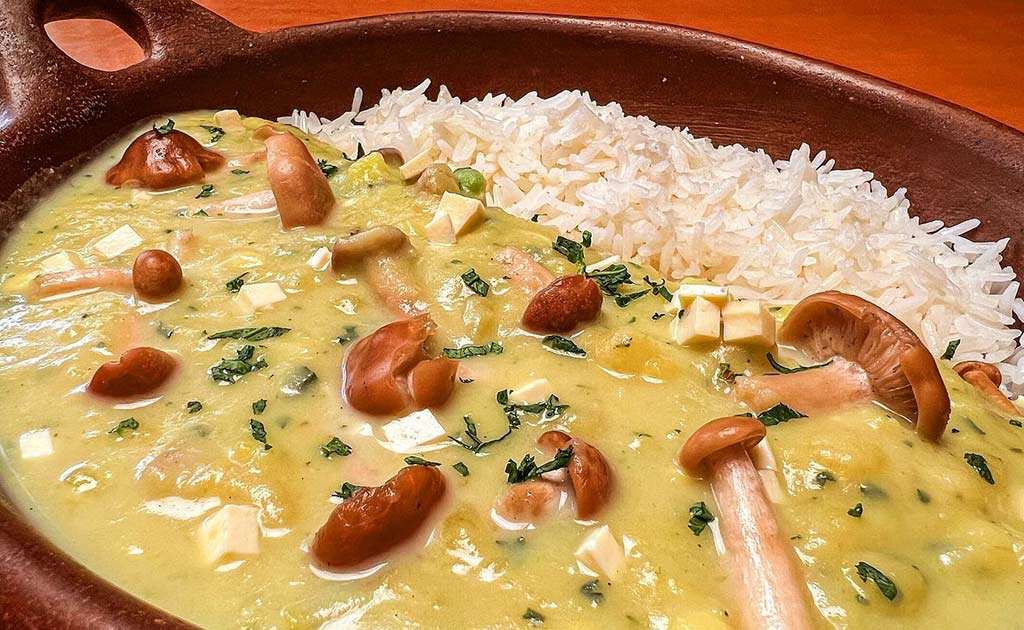
Capchi is a traditional creamy dish from Cusco that can be prepared with different ingredients. The most traditional and appreciated versions are made with fava beans and mushrooms, the latter available only during the rainy season.
Thanks to its light ingredients, this dish is ideal during the rainy season, between November and March, and may also help with the acclimatization process to high altitude.
Ingredients: mushrooms, fava beans, potatoes, rice, milk, cheese, and aromatic herbs such as huacatay.
Why try it? Because it is a highly nutritious option and one of the favorite dishes among those who prefer vegetarian meals.
4. Lechón
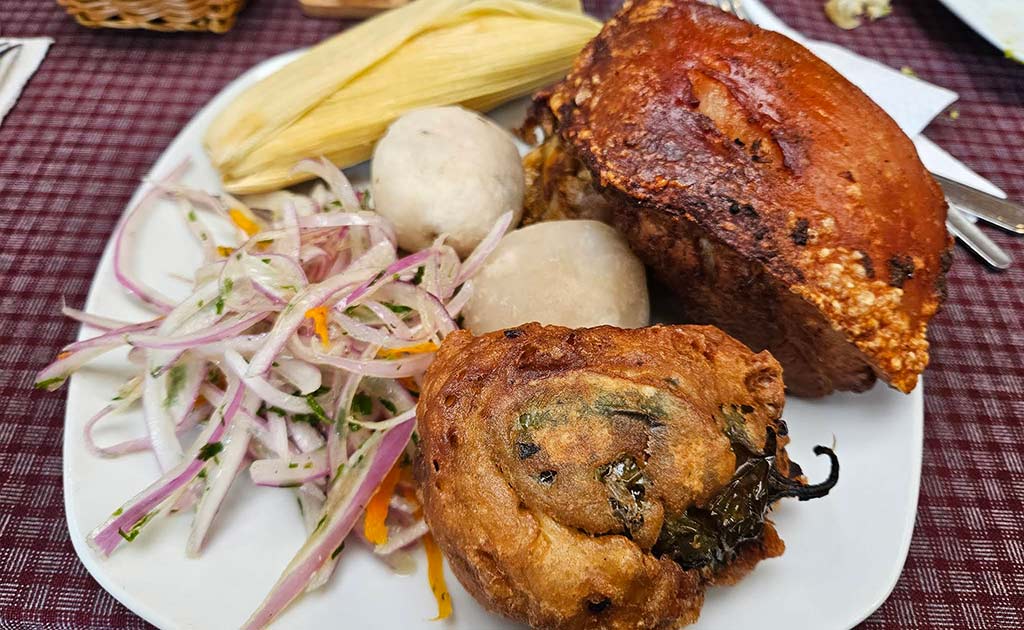
Pork holds an important place in Cusco cuisine, and lechón is one of its most traditional preparations. Its presence at festivals and celebrations is part of the cultural identity of the region.
Lechón stands out for its smoky flavor and intensely crispy skin, achieved by carefully seasoning and roasting a young pig. Each bite combines juiciness with a deep aroma.
Ingredients: pork, tamale (sweet or savory), and moraya.
Why try it? Because it is one of the most traditional dishes of the Sacred Valley and an excellent choice for those who enjoy rich and bold flavors.
5. Chicharrón
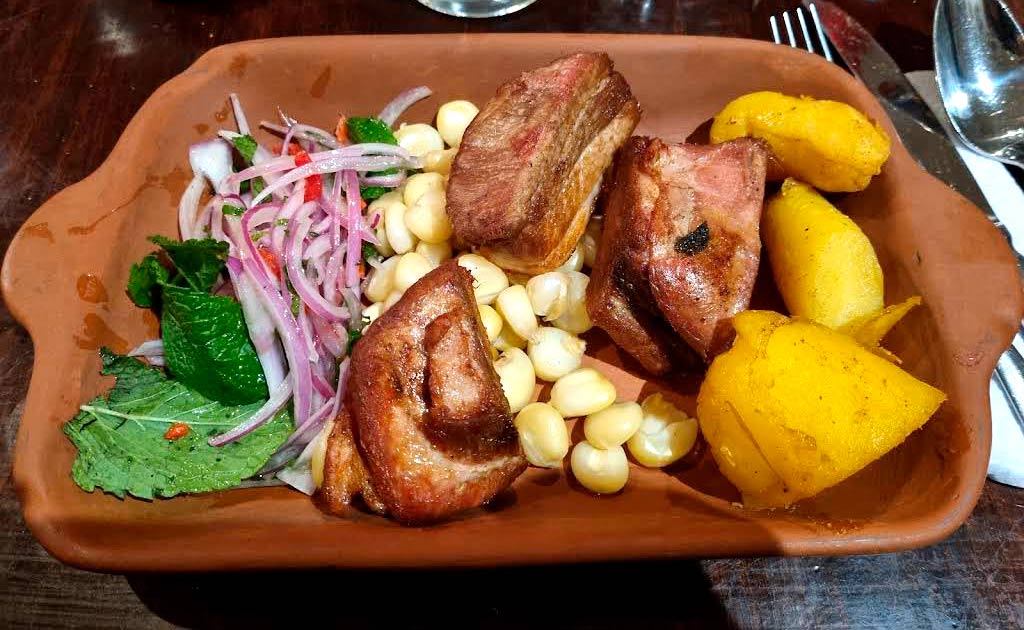
Cusco-style pork rinds are prepared by slowly frying pork in its own fat, creating an irresistible texture that is crispy on the outside and tender on the inside. This dish, with more than a century of tradition, is a true culinary symbol of the region.
In addition, thanks to the small and light portions, it can also be enjoyed as an appetizer, making it perfect to start any gastronomic journey.
Ingredients: fried pork, herbal tea, french fries, and salad.
Why try it? Because it represents an important part of Cusco’s culinary culture and can be found in many traditional variations.
6. Adobo cusqueño
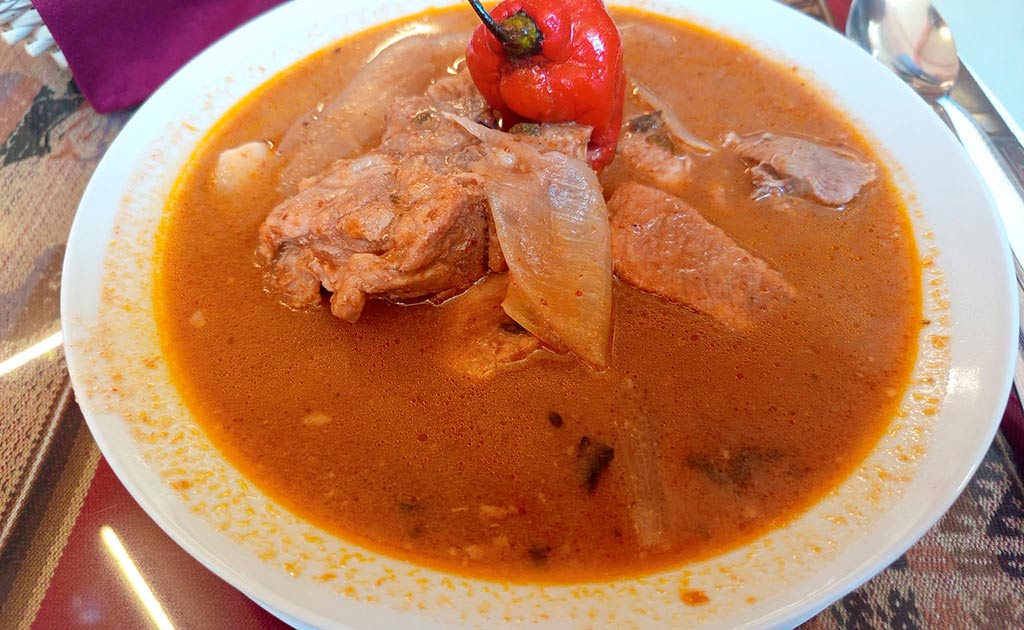
A traditional Sunday dish in Cusco, adobo is a stew made with pork that is previously marinated in a blend of many ingredients.
Ideally served in the morning, it is also known as a “hangover cure” thanks to its intense flavors, slight acidity from the chicha, and aromatic character.
Ingredients: pork loin, rocoto pepper, onion, chicha de jora, and Oropesa bread.
Why try it? Because it is perfect for restoring energy after a night of celebration or a long day of travel.
7. Chairo
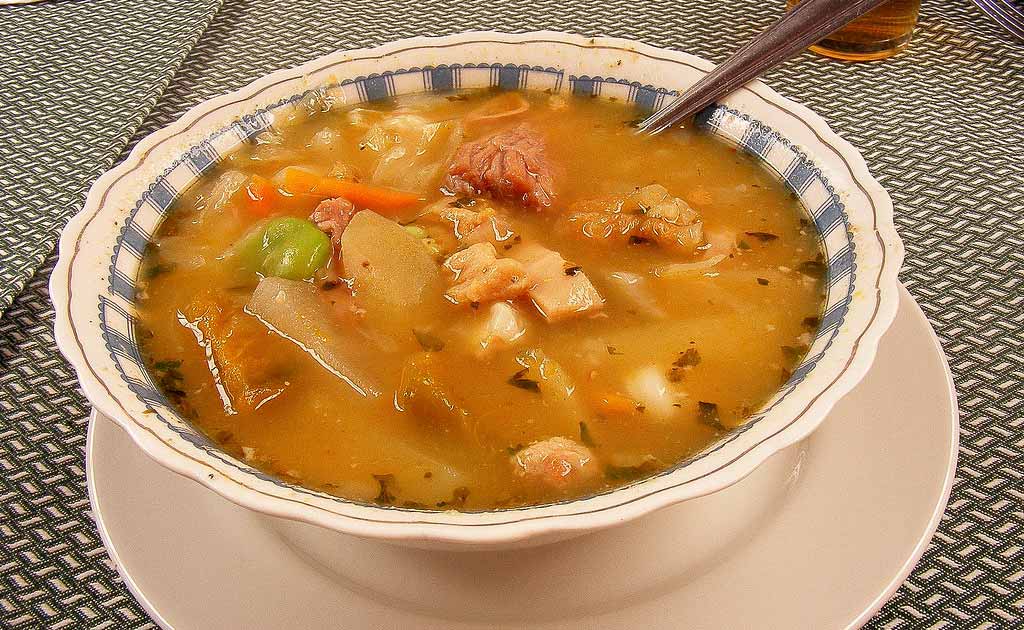
If you are looking for a truly ancestral soup in Cusco, chairo is the perfect choice. This thick soup, made with chuño and a variety of comforting ingredients, continues the tradition of being a hearty and highly nutritious dish designed to sustain long working days.
If you travel during the rainy season, it is perfect for fighting the cold, and you can easily find it in most traditional restaurants throughout the region.
Ingredients: chuño, potatoes, moraya, lamb meat, fava beans, hominy corn, and Andean herbs.
Why try it? Because it is an energizing and traditional dish, ideal for recharging before any adventure in the Andes.
Most Popular Ingredients in the Sacred Valley
Ingredient | Origin | Flavor and Texture | Culinary Uses |
|---|---|---|---|
| Chuño | Potato dehydrated through a traditional freezing and drying process carried out in the Andean highlands. | Firm, earthy, and concentrated. | Soups, stews, and side dishes. |
| Moraya | White potato dehydrated and washed several times to remove impurities and soften its flavor. | Soft and floury. | Traditional soups and main dishes. |
| Andean Potatoes | More than 3,000 varieties cultivated in the highlands of Cusco and other Andean regions. | Ranges from creamy to firm, sweet to earthy. | Foundation of much of traditional Cusco cuisine. |
| Fava Beans | Cold-resistant Andean crop widely used in local gastronomy. | Creamy and slightly sweet. | Capchi, stews, and salads. |
| Andean Mushrooms | Mushrooms gathered during the rainy season in different high-Andean areas. | Aromatic and delicate. | Capchi, soups, and stir-fries. |
| Giant Sacred Valley Corn (Choclo/Mote) | Native variety considered one of the most valued within Andean culture. | Sweet, tender, and large in size. | Appetizers, side dishes, and soups. |
| Andean Herbs (Huacatay, Muña) | Aromatic plants grown at high altitude and traditionally used in Andean cuisine. | Intense, fresh, and minty. | Sauces, seasonings, infusions, and soups. |
| Chicha de Jora | Traditional beverage and culinary ingredient obtained through the fermentation of jora corn. | Mildly acidic and smooth. | Base for stews such as adobo and also consumed as a traditional drink. |
| Quinoa | Andean grain cultivated at high altitude and recognized for its high nutritional value. | Light and mild. | Soups, salads, stews, and beverages. |
| Tarwi | Andean legume soaked to remove its naturally bitter flavor. | Firm and slightly creamy. | Salads, stews, and creamy dishes. |
| Yellow Chili Pepper | Chili pepper cultivated in the temperate valleys of Cusco and widely used in Peruvian cuisine. | Mild heat with a fruity flavor. | Sauces, seasonings, and stews. |
| Kiwicha | Ancient Andean grain valued for its nutritional properties and culinary versatility. | Soft, crunchy, and slightly sweet. | Soups, desserts, and beverages. |
Frequently Asked Questions
1. Which Sacred Valley dishes should I not miss?
We recommend trying seven iconic dishes: Chiri Uchu, roasted guinea pig, fava bean and mushroom capchi, lechón, pork rinds, Cusco-style adobo, and chairo. Each one represents an essential part of Cusco’s culinary identity, and there are options for every taste.
2. Is Chiri Uchu eaten year-round or only during festivals?
You can find it at any time of the year, but if you visit Cusco between May and June during the Corpus Christi celebration, you will experience it in its most traditional setting alongside food fairs full of history.
3. What is Chiri Uchu like?
Chiri Uchu is a very diverse dish served cold that combines meats, seaweed, fritters, and ingredients from different regions of Peru. Its flavor is bold yet balanced, making it ideal for discovering the culinary fusion inherited from the Tahuantinsuyo Empire.
4. How recommended is it to try guinea pig if I have never had it before?
It is an excellent opportunity. Guinea pig meat is tender, nutritious, and highly representative of Cusco culture. In the Sacred Valley, it is usually roasted with Andean herbs that enhance its traditional flavor.
5. Are there vegetarian options within traditional cuisine?
Yes, fava bean and mushroom capchi is one of the best vegetarian options in Cusco cuisine. It stands out for its creamy texture, mild flavor, and the fresh aroma of seasonal mushrooms.
6. What is the best season to try capchi?
The best time is during the rainy season, between November and March, when the mushrooms are fresh and the cold weather makes warm, creamy, and comforting dishes especially enjoyable.
7. Is lechón too heavy to eat during a tour?
It is a fairly hearty dish, but it is absolutely worth trying if you enjoy tender pork with crispy skin and a smoky flavor. It is also very easy to find in Sacred Valley restaurants throughout the year.
8. Is Cusco-style adobo spicy?
It is not overly spicy, although it does have a slight rocoto pepper kick and a rich flavor thanks to the chicha de jora. Traditionally served in the morning, it is ideal for restoring energy after a long night.
9. Which traditional soup should I try in the Sacred Valley?
Chairo is one of the best choices. It is an ancestral, thick, and highly nutritious soup, perfect for those engaging in activities at high altitude or looking to regain energy.
10. Does the Sacred Valley VIP tour include time to try these dishes?
Yes, this tour includes a lunch stop in Urubamba, where you can enjoy a buffet featuring a wide variety of traditional specialties from Cusco cuisine.