June 08, 2026
The Best Route Through the Sacred Valley: What to See Step by Step
The Sacred Valley of the Incas is one of the most visited tourist destinations in Cusco. However, many travelers arrive without knowing the best route to explore its towns, archaeological sites, and natural landscapes. In this article, you’ll discover the best itinerary through the Sacred Valley, the places you should visit, recommended tour options, and how to travel independently to make the most of your experience.
Contents
- Where Is the Sacred Valley Located?
- What Is the Best Route Through the Sacred Valley?
- Pisac
- Ollantaytambo
- Chinchero
- Maras and Moray
- How Many Days Do You Need?
- Recommended Tours
- Frequently Asked Questions About the Best Sacred Valley Route
Where Is the Sacred Valley Located?
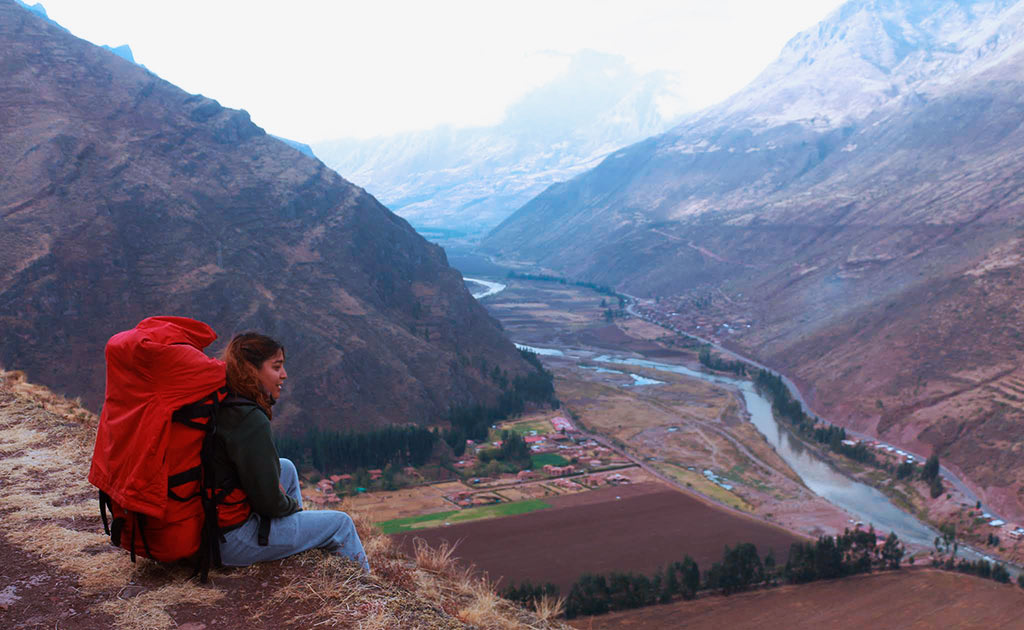
The Sacred Valley of the Incas is located in the Peruvian Andes, specifically in the Cusco region. Its territory follows the course of the Urubamba River, primarily from the town of Pisac, which is located 34 kilometers by car from the city of Cusco.
There are several routes to reach the Sacred Valley from the city. While the main route passes through Pisac, you can also choose the road that goes through Chinchero first, traveling in the opposite direction of the traditional circuit.
What Is the Best Route Through the Sacred Valley?
The geography of the Sacred Valley is home to numerous Andean towns, archaeological sites, and natural landscapes, so the best route will depend on the places that interest each visitor the most.
Among the valley’s main tourist destinations are Ollantaytambo, Pisac, Chinchero, Maras, Moray, Calca, Yucay, and Urubamba. Due to the large number of attractions, the route can be completed in one or two days to explore most sites at a more relaxed pace, although there are also tours that allow visitors to see the most important highlights in just one day.
The best tourist route through the Sacred Valley begins in Cusco and heads toward the town of Pisac. The journey then continues to Ollantaytambo and concludes with visits to Chinchero, Maras, and Moray.
Pisac
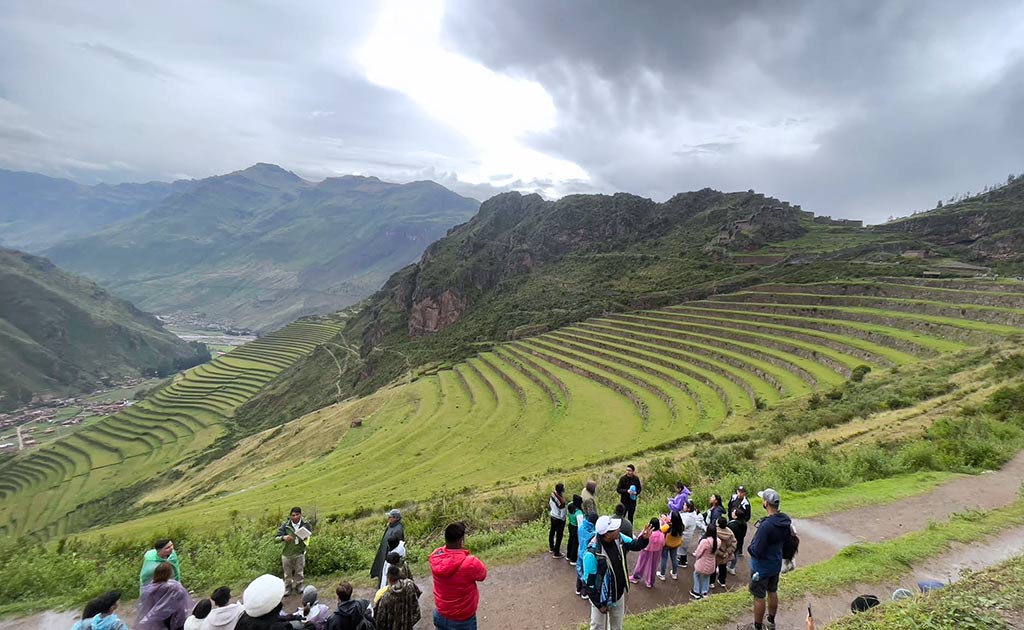
The town of Pisac is usually the first stop on the best route through the Sacred Valley. This destination is home to an impressive archaeological site perched on the mountaintops and a handicraft market that is among the most popular in Peru.
The drive from the city of Cusco to Pisac takes nearly 50 minutes. Along the way, visitors can enjoy the first Andean landscapes that welcome them to the Sacred Valley.
- Pisac Archaeological Site: Located high in the mountains above Pisac, it features important Inca structures that once formed part of one of the empire’s main citadels. From the summit, visitors can enjoy one of the finest views of the valley, including mountains, agricultural terraces, and the Urubamba River.
- Pisac Traditional Market: Filled with traditional textiles and souvenirs, this vibrant market adds color to the town and offers the perfect opportunity to explore its main streets, which preserve both Inca and colonial heritage and are largely pedestrian-friendly.
Ollantaytambo
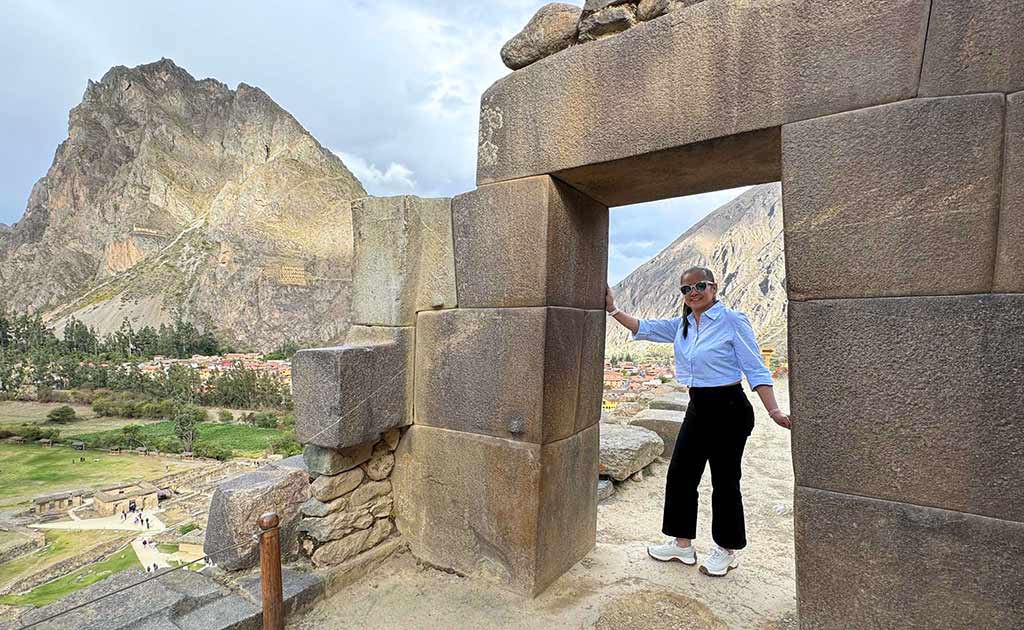
Ollantaytambo is the most popular town in the valley, not only because it is home to the main train station to Machu Picchu, but also because it preserves an impressive Inca fortress and retains its original urban layout from the time of the Tahuantinsuyo Empire.
The drive from the city of Cusco takes approximately 1 hour and 45 minutes, passing through many of the Sacred Valley’s most remarkable natural attractions.
- Ollantaytambo Fortress: Located next to the town and stretching across an entire mountainside, this impressive Inca citadel features iconic structures such as the Temple of the Sun and massive stone monoliths where the Incas worshipped their deities.
- Exploring Ollantaytambo: The town itself is a destination worth discovering. Walking through its narrow stone streets allows visitors to admire Inca walls and water channels, making it one of the most rewarding experiences in the Sacred Valley.
- Pinkuylluna Archaeological Site: Situated on a mountain overlooking Ollantaytambo, it can be reached via a short 30-minute hike that leads to one of the area’s most scenic viewpoints, alongside ancient colcas (Inca storage buildings).
Chinchero
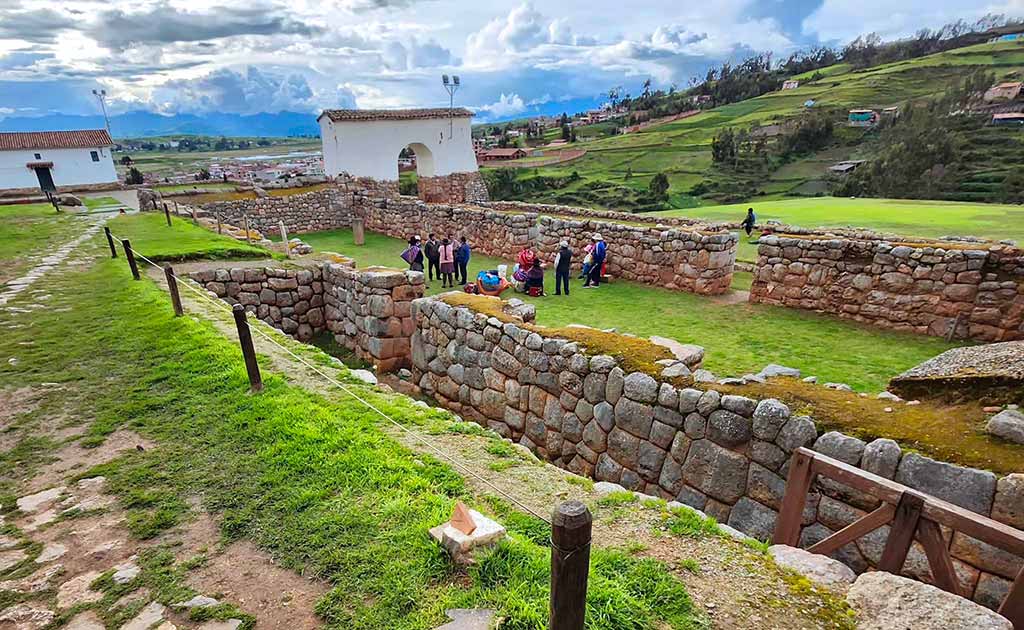
Chinchero is the most traditional and picturesque town in the Sacred Valley. Its cultural traditions remain deeply rooted, especially its textile heritage, which dates back to pre-Hispanic times. It is also home to a vast Inca archaeological complex.
To reach Chinchero, travelers can take an alternative route from Cusco (approximately 1 hour by car), although it is also accessible from Ollantaytambo as part of the best Sacred Valley route. This journey takes just under 1 hour and 30 minutes by car.
- Chinchero Archaeological Park: Located next to an ancient Inca palace, this extensive archaeological site features numerous Inca structures spread across a large plateau. It also offers breathtaking views of the Sacred Valley from one of the highest areas in the region.
- Textile Centers: Chinchero’s textile tradition is one of its most distinctive cultural features, preserving techniques that date back to pre-Hispanic times. Visitors can enjoy immersive experiences that showcase traditional weaving methods and purchase unique souvenirs rich in history.
Maras and Moray
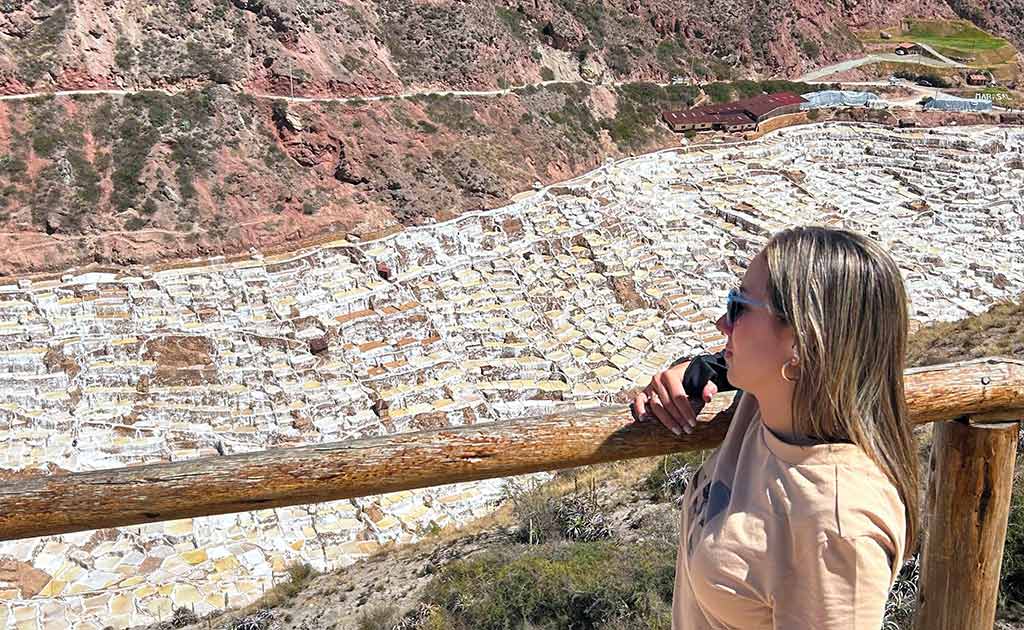
Due to their proximity, Maras and Moray are usually visited as part of the same excursion, although both belong to the town of Maras.
The usual drive from the city of Cusco takes around 1 hour and 30 minutes. The Maras Salt Mines are typically the first stop, followed by the circular terraces of Moray, located just 25 minutes away.
- Maras Salt Mines: Made up of more than 300 salt ponds, this site creates extraordinary natural scenery and is considered one of the most surreal landscapes in the Sacred Valley. The visit is relatively short and also offers the opportunity to purchase the famous pink salt of Maras.
- Moray Circular Terraces: This site consists of three large circular terrace systems, each creating a distinct microclimate at different levels. For this reason, it is believed to have functioned as an Inca agricultural laboratory. Today, it remains one of the most fascinating historical and scenic attractions in the Sacred Valley.
How Many Days Do You Need?
Exploring the entire Sacred Valley requires more than one day. If you want to visit its main historical and natural attractions, you will need at least two days. The best self-guided Sacred Valley route over two days could be organized as follows:
Day 1 in the Sacred Valley:
The first day of a self-guided Sacred Valley itinerary begins in Pisac. It is recommended to depart early in the morning to maximize your time exploring the valley’s most important Inca citadels.
Next, you can stop for lunch in the town of Urubamba while continuing your journey toward Ollantaytambo. This allows you to experience a broader perspective of the Sacred Valley.
The final destination of the first day is Ollantaytambo, an ideal place to spend the night in a living Inca town.
Day 2 in the Sacred Valley:
The second day can begin at a more relaxed pace after breakfast. From Ollantaytambo, travelers can head toward Maras to visit the famous salt mines and the circular terraces of Moray.
The journey then continues to Chinchero, located a short distance away. This town is an excellent place to enjoy lunch and discover more about Cusco’s traditional cuisine.
After visiting the Chinchero archaeological site, you can also explore its traditional textile centers to complete your Sacred Valley itinerary.
Finally, you can return to the city of Cusco at sunset, although making several scenic stops along the way is highly recommended to appreciate the stunning natural landscapes that define this remarkable region.
Recommended Tours
Classic Sacred Valley Tour | VIP Sacred Valley Tour | |
|---|---|---|
| Type of Tour | Traditional | More Comprehensive |
| Duration | 1 Day | 1 Day |
| Included Destinations | Pisac, Ollantaytambo, and Chinchero | Pisac, Ollantaytambo, Chinchero, Maras, and Moray |
| Included Services | Full tourist transportation, professional guide, and lunch in the town of Urubamba | Full tourist transportation, professional guide, and lunch in the town of Urubamba |
| Time Spent at Each Destination | Longer and more relaxed | Shorter due to the number of sites visited |
| Ideal For | Travelers who want to explore the most important sites at a relaxed pace | Travelers who want to see as many attractions as possible in a single day |
| Difficulty Level | Moderate | Moderate |
| Includes Maras and Moray | No | Yes |
| Popularity | Very popular among first-time visitors to Cusco | One of the most requested tours today |
| Recommended For | Short trips or flexible itineraries | Travelers with limited time looking for a more complete experience |
Frequently Asked Questions
1. How can I get to the Sacred Valley from Cusco?
To reach the Sacred Valley from Cusco, you can take private transportation, a taxi, or join an organized tour. The most common route heads toward Pisac, although access through Chinchero is also possible. The journey usually takes between 1 and 2 hours depending on your destination.
2. How much time is needed to explore the Sacred Valley?
A minimum of two days is recommended to explore the Sacred Valley at a comfortable pace. It is possible to visit the main attractions in a single day, but with less time at each location. For a more complete experience, a two-day itinerary is ideal.
3. What is the best route through the Sacred Valley?
The most recommended route begins in Cusco and heads toward Pisac, then continues to Ollantaytambo, and finishes in Chinchero along with visits to Maras and Moray. This itinerary allows travelers to experience the valley’s main archaeological and scenic attractions.
4. Which places can be visited in the Sacred Valley?
The main destinations include Pisac, Ollantaytambo, Chinchero, Maras, Moray, Urubamba, and Calca. Each offers cultural, archaeological, and natural attractions that are an essential part of the Sacred Valley experience.
5. Can the Sacred Valley be visited independently?
Yes, it is possible to explore the Sacred Valley on your own using public transportation or taxis. However, many travelers prefer an organized tour because of the convenience of transportation and the insights provided by a professional guide.
6. What is included in a Sacred Valley tour?
A classic Sacred Valley tour typically includes tourist transportation, a professional guide, lunch in Urubamba, and visits to the archaeological sites of Pisac, Ollantaytambo, and Chinchero.
7. What is the difference between the Classic Tour and the VIP Tour?
The Classic Tour visits the main destinations such as Pisac, Ollantaytambo, and Chinchero, while the VIP Tour also includes Maras and Moray, offering a more comprehensive experience in a single day.
8. When is the best time to visit the Sacred Valley?
The best time to visit the Sacred Valley is during the dry season, from April to October. During these months, the weather is generally clear, making it easier to enjoy the landscapes and outdoor activities.
9. Is acclimatization necessary before visiting the Sacred Valley?
Yes, spending some time acclimatizing in Cusco before starting your trip is recommended. Although the Sacred Valley is at a lower elevation, some destinations are still located at considerable altitude.
10. Where is the best place to stay when visiting the Sacred Valley?
The most popular accommodation options are Cusco, Urubamba, and Ollantaytambo. Many travelers choose Ollantaytambo because of its strategic location, which makes it convenient to continue onward to Machu Picchu the following day.